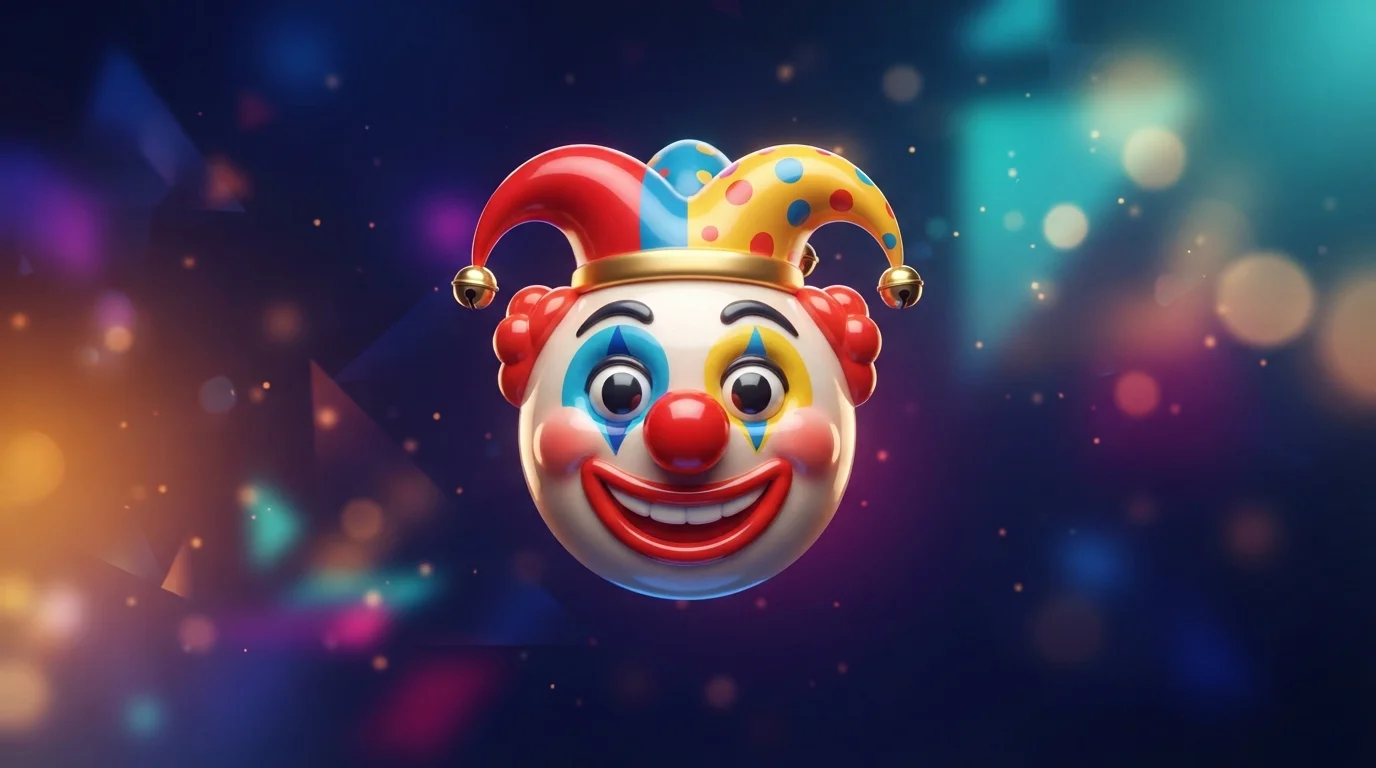
The 🤡 clown face emoji is one of the most playful and sometimes confusing emojis used in texting and social media. If you’re searching for Clown Face Emoji Meaning 🤡, this emoji can represent humor, silliness, foolish behavior, embarrassment, or someone acting like a “clown.”
Depending on the conversation, it may be used as a harmless joke, a way to laugh at yourself, or even to describe someone whose behavior seems ridiculous. In some situations, the clown emoji can also carry a sarcastic or teasing tone, so understanding the surrounding message is important.
Its meaning may change depending on who sends it, why they send it, and the relationship between the people involved. In this guide, you’ll learn the different meanings of the clown face emoji, how it is used in texting and social media, and what it can mean in friendship, flirting, relationships, and everyday conversations.
What Does the Clown Face Emoji 🤡 Mean?
The 🤡 clown face emoji usually represents foolishness, silliness, embarrassment, absurdity, or acting like a clown.
Its meaning can change according to the situation. Common interpretations include:
- “I’m being foolish.”
- “That was embarrassing.”
- “I can’t believe I did that.”
- “You’re acting ridiculous.”
- “This situation is a joke.”
- “I’m joking or being silly.”
- “I played myself.”
- “I should have known better.”
- “That was a foolish decision.”
- “I’m laughing at how ridiculous this is.”
The important thing is that 🤡 does not automatically mean someone is calling another person foolish. Very often, people use it on themselves.
For example:
“I went to the kitchen and forgot why I was there 🤡”
The sender is probably making fun of themselves.
Compare that with:
“You really thought that would work 🤡”
That can sound more teasing or insulting because the emoji is directed at another person.
Clown Face Emoji Meaning in Text Messages
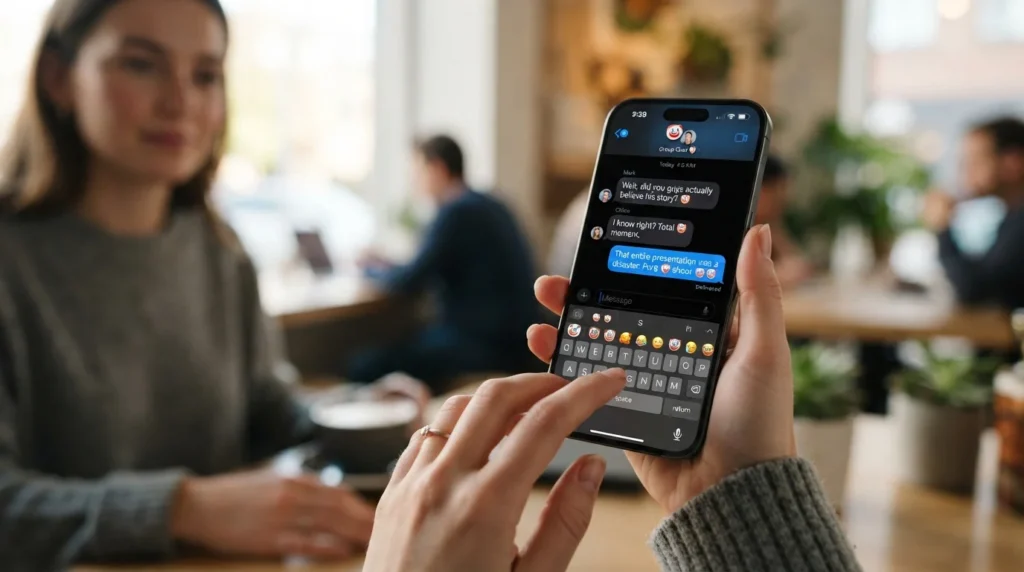
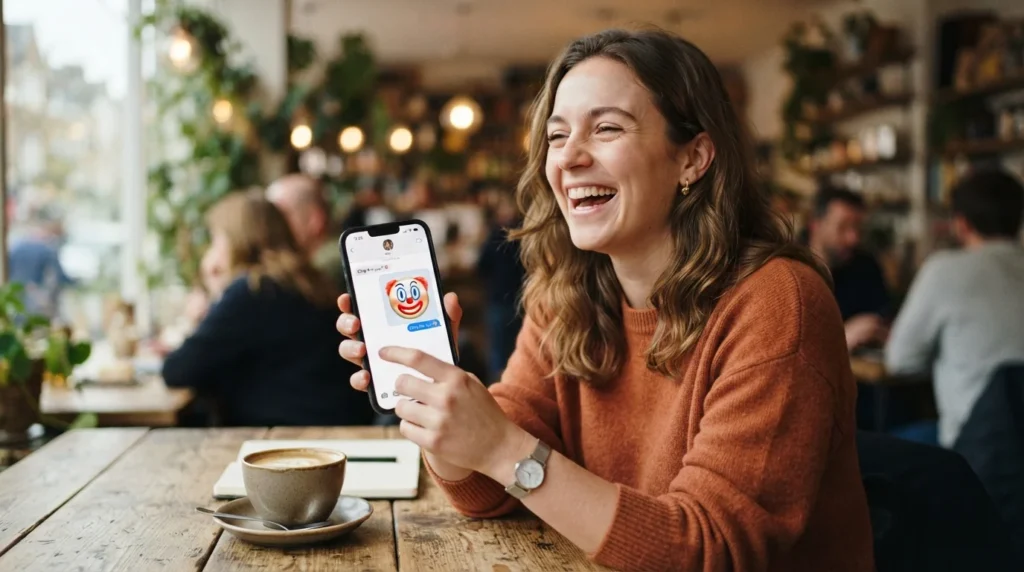
In texting, 🤡 is often used as a reaction to something foolish, funny, embarrassing, or ironic.
The meaning usually becomes clear from the words around it.
1. “I’m an idiot” or “I messed up”
Someone may use 🤡 after admitting a silly mistake.
Example:
“I locked myself out of my own house 🤡”
Here, the sender is not necessarily seriously insulting themselves. They are using humor to admit that they made a ridiculous mistake.
2. “I played myself”
Another common use is when someone realizes that their own decision backfired.
Example:
“I said I wouldn’t check her profile again and here I am 🤡”
The emoji communicates self-awareness. The person knows they are doing something they promised themselves they wouldn’t do.
3. “That was embarrassing”
The emoji can also express embarrassment.
Example:
“I waved back at someone who wasn’t waving at me 🤡”
The sender is laughing at an awkward moment.
4. “This is ridiculous”
Sometimes 🤡 describes an entire situation rather than a person.
Example:
“They changed the meeting time three times today 🤡”
The emoji suggests that the situation feels absurd or poorly organized.
5. “I can’t take this seriously”
In casual conversations, 🤡 can signal that something is so ridiculous that the sender finds it funny.
The exact tone depends heavily on the relationship between the people chatting.
Clown Face Emoji Meaning on Social Media
On platforms such as Instagram, TikTok, X, Facebook, Reddit, and messaging apps, 🤡 often has a sarcastic or self-mocking meaning.
People commonly use it in captions, comments, memes, replies, and reaction posts.
For example:
“Me thinking I was going to save money this month 🤡”
The person is joking about their own spending habits.
Another example:
“I believed that rumor for five minutes 🤡”
Here, the emoji communicates embarrassment and humor.
🤡 in comments
Someone may comment:
“Bro really did that 🤡”
This can mean the commenter thinks the person’s action was foolish or ridiculous.
Depending on the relationship, it may be playful teasing or an insult.
🤡 in memes
The clown emoji is particularly common in memes about bad decisions, unrealistic expectations, failed plans, and embarrassing moments.
It can communicate a whole idea without requiring a long explanation:
“I knew better, but I did it anyway.”
That is one reason 🤡 appears frequently in humorous online conversations.
Clown Face Emoji Meaning in Friendship
Among friends, 🤡 is often harmless teasing.
Close friends may use it when someone makes a silly decision, tells an obviously exaggerated story, or gets embarrassed.
Example:
Friend: “I forgot my own birthday was this weekend.”
You: “How do you forget your birthday? 🤡”
In this case, the emoji is likely playful.
Another example:
Friend: “I told everyone I wasn’t hungry and then ate half the pizza.”
You: “You’re such a clown 🤡”
If the friendship is casual and teasing, this may be funny rather than offensive.
However, tone matters. If someone is already upset or the conversation is serious, 🤡 may feel disrespectful.
Clown Face Emoji Meaning in Romantic Relationships
In romantic relationships, 🤡 can have both playful and emotional meanings.
Partners may use it to tease each other:
“You really thought I wouldn’t notice you eating my fries 🤡”
The emoji keeps the message playful.
But it can also be used when someone feels foolish because of their romantic behavior.
Example:
“I stayed awake waiting for your reply 🤡”
This could mean:
“I can’t believe I actually waited that long.”
In this context, the emoji expresses self-mockery rather than affection.
A romantic partner might also use it after making a silly mistake:
“I forgot our movie night was tonight 🤡 I’m sorry!”
Here, the emoji softens the admission and makes it less formal.
Clown Face Emoji Meaning From a Girl
If a girl sends you 🤡, the meaning depends on what she is responding to.
It might mean:
- She is teasing you.
- She thinks something you said was ridiculous.
- She is laughing at herself.
- She is embarrassed.
- She is joking.
- She thinks you made a funny mistake.
- She is expressing disbelief.
For example:
You: “I forgot where I parked.”
Her: “You’re actually a clown 🤡”
This is probably teasing if your conversation is normally playful.
But:
You: “I lied to you about something important.”
Her: “🤡”
That would have a much more negative tone.
The emoji alone cannot tell you exactly what she feels. Look at the surrounding messages and the history of your conversation.
Clown Face Emoji Meaning From a Guy
A guy may use 🤡 in much the same way.
For example:
“I thought she was interested and then she told me we’re just friends 🤡”
This expresses disappointment and self-mockery.
Another example:
“You really ordered pineapple pizza? 🤡”
That could simply be playful teasing.
If a guy sends 🤡 after something romantic, it can sometimes mean he feels embarrassed or realizes that he misunderstood the situation.
For example:
“I thought you were flirting with me 🤡”
The emoji suggests, “Well, apparently I misunderstood that.”
Clown Face Emoji Meaning From a Crush
When a crush sends 🤡, context becomes especially important because people often use emojis to make potentially awkward messages feel lighter.
Suppose you say:
“I spent an hour choosing what to wear for coffee.”
Your crush replies:
“And I showed up in a hoodie 🤡”
They are probably making fun of themselves.
But if you say:
“I think you might like me.”
And your crush responds:
“🤡”
That could mean many things. They might be joking, reacting awkwardly, disagreeing, or suggesting that the assumption was mistaken.
You should not interpret the emoji by itself as proof of attraction or rejection.
Look at the complete conversation.
Clown Face Emoji Meaning From a Partner
A partner may use 🤡 to express playful embarrassment or frustration.
For example:
“I said I wasn’t going to buy anything today and came home with three bags 🤡”
This is self-mockery.
Or:
“You really thought I wouldn’t notice that surprise? 🤡”
This can be affectionate teasing.
In a more serious argument, however, the same emoji could become dismissive:
“You actually believe that? 🤡”
Here, it may feel like the person is mocking you.
The relationship and tone determine whether the emoji feels affectionate, humorous, sarcastic, or disrespectful.
Friendly Meaning of 🤡
The friendly use of 🤡 is usually lighthearted.
Friends may use it to say:
“You’re being silly.”
or:
“That was such a funny mistake.”
For example:
“You brought an umbrella on the sunniest day of the year 🤡”
This is normally harmless teasing.
The emoji can also strengthen an inside joke between friends.
If two friends regularly joke about someone’s forgetfulness, one might send:
“Forgot your keys again 🤡”
The meaning comes from the established friendship rather than the emoji alone.
Romantic Meaning of 🤡
The clown face emoji is not traditionally a romantic emoji like ❤️, 😘, or 🥰.
However, it can appear in romantic conversations because people use humor when flirting or discussing embarrassing feelings.
For example:
“I practiced what I was going to say before calling you 🤡”
This can communicate nervousness and self-consciousness.
Another example:
“I checked my phone five times waiting for your message 🤡”
The sender is admitting that they care while making fun of themselves.
So, 🤡 can appear in romantic conversations without being a romantic symbol itself.
Sarcastic Meaning of the Clown Emoji
Sarcasm is one of the most recognizable uses of 🤡.
A person may use it when reality is very different from what they expected.
Example:
“Sure, I’ll just finish this assignment in ten minutes 🤡”
The sender obviously does not believe the task will be that easy.
Another example:
“I said I was going to sleep early tonight 🤡”
If they send this at 2 a.m., the emoji highlights the contradiction.
In these situations, 🤡 often means:
“Look how unrealistic or foolish I am being.”
Self-Deprecating Meaning of 🤡
Self-deprecating humor means making yourself the subject of the joke.
This is one of the most common interpretations of the clown emoji.
Examples include:
“I forgot my password again 🤡”
“I bought the wrong size 🤡”
This trusted the weather app and got soaked 🤡”
The sent the message to the wrong person 🤡”
The person is usually laughing at their own mistake.
This is different from directly calling someone else a clown.
Negative Meaning of 🤡
Although 🤡 is often humorous, it can have a negative meaning.
Someone may use it to mock another person’s behavior.
For example:
“You really lied and thought nobody would notice 🤡”
Here, the emoji can make the message sound contemptuous or insulting.
It may suggest:
- Foolish behavior
- Ridiculous behavior
- Poor judgment
- Embarrassment
- Mockery
- Disbelief
This is why you should consider the conversation before deciding what the sender means.
Positive or Playful Meaning of 🤡
There is also a completely playful side to the emoji.
Sometimes someone sends 🤡 because they are comfortable enough with you to make fun of themselves.
For example:
“I just spent 20 minutes looking for my glasses while wearing them 🤡”
There is no serious negativity here.
The emoji simply makes the story funnier.
🤡 Meaning in Dating and Flirting
In dating conversations, 🤡 can communicate nervousness, embarrassment, or self-awareness.
For example:
“I changed my outfit four times before our date 🤡”
This can mean:
“I cared way too much about looking good.”
Another example:
“I thought you were going to ignore me, so I didn’t text first 🤡”
The sender may be joking about overthinking.
Sometimes the emoji is used after a failed flirting attempt:
“I tried that pickup line and immediately regretted it 🤡”
Here, the sender is laughing at themselves.
🤡 Meaning After a Mistake
One of the easiest ways to understand the emoji is to look for mistakes.
When someone says:
“I just realized the appointment was next week, not today 🤡”
the emoji probably means:
“I can’t believe I made that mistake.”
It does not necessarily mean the person genuinely thinks they are foolish.
The emoji adds humor to the mistake.
🤡 Meaning When Someone Says “I Told You So”
Someone may also use 🤡 after realizing that another person was correct.
Example:
“You told me not to buy it, but I bought it anyway. Now it broke 🤡”
The emoji can mean:
“You were right, and I ignored you.”
It is often a humorous way to admit defeat.
Common Situations Where People Use 🤡
| Situation | Possible meaning |
| Making a silly mistake | “I can’t believe I did that.” |
| Getting embarrassed | “That was awkward.” |
| Bad decision | “I played myself.” |
| Teasing a friend | “You’re being ridiculous.” |
| Failed flirting | “That didn’t go as planned.” |
| Sarcasm | “This is absurd.” |
| Memes | “Look how ridiculous this situation is.” |
| Disappointment | “I really thought this would work.” |
| Self-mockery | “I’m laughing at myself.” |
| Mocking someone | “That behavior is foolish.” |
These meanings are possibilities rather than fixed translations. The same emoji can change tone from one conversation to another.
How to Respond When Someone Sends 🤡
Your response should match the situation.
If a friend sends 🤡 after making a mistake, you can joke back.
Possible responses:
“😂 It happens to everyone.”
“Bro, how did you even manage that?”
“You’re never beating the clown allegations 🤡”
If someone sends it after an embarrassing moment, you can be supportive:
“Don’t worry, nobody noticed.”
“😂 You’ll laugh about it later.”
If your crush sends 🤡 during a playful conversation, you can keep the tone light:
“Okay, what did I do now? 😂”
“I know you’re laughing at me.”
“You started this 🤡”
If your partner sends it after making a silly mistake:
“Come here, you little clown 😂”
Or:
“It’s okay, I still love you.”
For a casual conversation, a simple laughing emoji may be enough:
“😂😂”
The best response usually follows the tone already established between you.
What Does 🤡 Mean When Someone Sends Only the Emoji?
A single 🤡 can be harder to interpret.
For example:
You: “I forgot my own appointment.”
Them: “🤡”
They are probably teasing you.
But if you send:
“I think I’m going to quit my job.”
and someone responds:
“🤡”
the meaning could be more negative or dismissive.
A one-emoji response has very little context, so avoid making assumptions.
Look at what happened immediately before it.
What Does 🤡 Mean in a Group Chat?
In group chats, the clown emoji is often used as a quick reaction.
Someone might tell a ridiculous story, and another person replies:
“🤡”
This could mean everyone finds the situation funny.
It can also be used when someone makes an obviously questionable claim:
“I can definitely finish 50 pages tonight.”
“🤡”
In that case, the response communicates disbelief.
Group-chat culture can also make emojis more exaggerated than they would be in a private conversation.
Clown Emoji and Internet Slang
The clown emoji is closely connected with phrases such as:
- “I played myself.”
- “I’m a clown.”
- “What a clown.”
- “Clown behavior.”
- “I was being a clown.”
- “Clown moment.”
- “I look like a clown.”
These phrases do not always literally refer to a circus clown.
Online, “clown” is often slang for behavior that appears foolish, naive, embarrassing, or ridiculous.
For example:
“I believed him again. I’m such a clown 🤡.”
This is normally self-directed humor.
🤡 vs 😂
The 😂 face with tears of joy generally focuses on laughter.
The 🤡 clown face emoji adds an idea of foolishness, absurdity, or embarrassment.
Compare:
“That joke was hilarious 😂”
This mainly means the joke made you laugh.
Now:
“I tried to open the door for someone and walked into it 🤡”
This emphasizes the embarrassing or foolish situation.
Both can appear together:
“I really did that 🤡😂”
The first emoji highlights the foolishness; the second highlights the laughter.
🤡 vs 🤪
The 🤪 zany face usually communicates playful craziness, silliness, or exaggerated humor.
The clown emoji is more likely to suggest foolishness, embarrassment, or ridiculous behavior.
For example:
“Let’s eat dessert before dinner 🤪”
sounds playful.
While:
“I forgot to bring the tickets 🤡”
sounds like an embarrassing mistake.
There is overlap, but the emotional focus is different.
🤡 vs 😭
The crying emoji can represent actual sadness, but online it is also commonly used to show that something is extremely funny or emotionally overwhelming.
For example:
“That video was so funny 😭”
The clown emoji would change the focus:
“I actually believed that video 🤡”
The second version suggests the speaker feels foolish for believing it.
🤡 vs 💀
The skull emoji is often used online to mean something like:
“I’m dead from laughing.”
For example:
“That comment took me out 💀”
The clown emoji is more connected to ridiculousness or foolishness:
“I really said that in public 🤡”
Both can appear together:
“I can’t believe you actually said that 🤡💀”
Common Misunderstandings About the Clown Emoji
Misunderstanding 1: 🤡 Always Means Insult
Not necessarily.
A person can use 🤡 about themselves:
“I forgot my keys again 🤡”
There is no insult toward another person.
Misunderstanding 2: 🤡 Always Means Someone Is foolish
The emoji can refer to a specific action rather than someone’s intelligence.
Someone might call their own decision “clown behavior” without believing they are generally foolish.
Misunderstanding 3: 🤡 Is Always Negative
It can be completely playful.
Friends often use it as a humorous reaction to small mistakes.
Misunderstanding 4: 🤡 Is a Romantic Emoji
The clown emoji itself is not inherently romantic.
It may appear in flirting or dating conversations, but the romantic meaning comes from the surrounding conversation.
Misunderstanding 5: One Emoji Gives You the Complete Answer
This is perhaps the biggest mistake.
Emoji interpretation depends on:
- The words around it
- Previous messages
- The relationship
- The sender’s personality
- The tone of the conversation
- Whether the discussion is serious or playful
- Online communication habits
Always interpret 🤡 in context.
How Culture and Personal Style Affect 🤡 Meaning
Emoji habits differ from person to person.
One person may use 🤡 almost every day as a joke. Another person may only use it when they are genuinely mocking someone.
Age, online communities, friendship groups, and personal texting habits can also influence how an emoji is understood.
For example, someone who frequently uses memes may use 🤡 casually. Someone who rarely uses emojis may intend it more seriously.
This is why dictionary-style emoji definitions can only provide a starting point.
The real meaning comes from communication context.
Is 🤡 Rude?
It can be, but it is not automatically rude.
Among close friends:
“You forgot your wallet again 🤡”
may be harmless teasing.
During an argument:
“You seriously believe that? 🤡”
may feel insulting.
If you are unsure how the sender intended it, pay attention to their words and the overall tone. You can also ask directly:
“Are you joking? 😂”
That gives the other person an easy opportunity to clarify.
Can 🤡 Mean “I’m Embarrassed”?
Yes.
This is especially common when someone shares an awkward experience.
For example:
“I called my teacher ‘Mom’ today 🤡”
The sender is likely embarrassed but laughing about it.
The emoji turns an uncomfortable moment into a funny story.
Can 🤡 Mean “I Got Played”?
Yes.
People sometimes use the clown emoji when they realize they trusted someone, misunderstood a situation, or expected something that did not happen.
For example:
“I thought he was going to pay me back today 🤡”
The emoji may communicate disappointment mixed with self-mockery.
In dating:
“I thought that was a date. Apparently it wasn’t 🤡”
The sender is likely describing their own misunderstanding.
Can 🤡 Be Used Flirtatiously?
It can be part of playful flirting, but 🤡 is not inherently a flirting emoji.
For example:
“I was trying to act cool around you and completely failed 🤡”
This could feel playful and flirty.
Likewise:
“Why do I smile every time you text me? 🤡”
Here, the emoji adds self-conscious humor to a romantic statement.
Whether this is actually flirting depends on the complete interaction, not just the emoji.
How to Tell Whether 🤡 Is Playful or Insulting
Look for several clues.
Playful use often has:
- Laughing emojis
- Friendly language
- A light conversation
- An obvious small mistake
- Existing friendship or romantic familiarity
- Self-directed humor
More negative use may have:
- Serious disagreement
- Direct criticism
- Mocking language
- Repeated dismissive comments
- No indication of joking
For example:
“I forgot my homework again 🤡😂”
is clearly lighthearted.
But:
“You actually believe that 🤡”
can sound dismissive.
The words matter as much as the emoji.
Clown Face Emoji Meaning: Quick Reference
If you need a simple explanation, the clown face emoji 🤡 usually communicates one of these ideas:
About yourself:
“I did something foolish.”
About a friend:
“You’re being ridiculous.”
The About a situation:
“This is absurd.”
After embarrassment:
“That was awkward.”
After disappointment:
“I played myself.”
In memes:
“This situation is ridiculous.”
In flirting:
“I feel silly or embarrassed around you.”
During an argument:
“You’re being ridiculous,” potentially in a mocking way.
The surrounding conversation determines which interpretation makes the most sense.
Final Thoughts on Clown Face Emoji Meaning
The clown face emoji meaning 🤡 is mainly connected with silliness, foolishness, embarrassment, absurdity, sarcasm, and self-mockery. People often use it when they make a mistake, realize they were wrong, feel embarrassed, or want to joke about a ridiculous situation.
In friendships, it can be a simple teasing emoji. In romantic conversations, it may express nervousness, awkwardness, or self-deprecating humor. On social media, it frequently appears in memes and sarcastic posts about bad decisions or unrealistic expectations.
At the same time, 🤡 can sound insulting when it is directed at someone during a serious disagreement. That is why there is no single interpretation that works for every message.
When you receive the clown emoji, consider who sent it, what they said before it, your relationship with them, and the overall tone of the conversation. Those details usually tell you much more than the emoji itself.
Frequently Asked Questions
1. What does the clown face emoji 🤡 mean?
The clown face emoji 🤡 commonly represents foolishness, silliness, embarrassment, sarcasm, or ridiculous behavior. It can describe the sender, another person, or a situation. The exact meaning depends on the context.
2. What does 🤡 mean in texting?
In texting, 🤡 can mean “I’m being silly,” “I made a foolish mistake,” “I played myself,” or “that is ridiculous.” Friends may also use it as playful teasing.
3. What does 🤡 mean from a girl?
A girl may use 🤡 to tease you, laugh at a mistake, express embarrassment, or describe her own behavior. It does not have one fixed meaning and should be interpreted using the surrounding conversation.
4. What does 🤡 mean from a guy?
A guy may use 🤡 when joking about himself, teasing someone, reacting to something ridiculous, or admitting that he made a mistake. The meaning depends on the conversation and relationship.
5. Does 🤡 mean someone is foolish?
Not necessarily. The clown emoji often refers to a particular foolish or embarrassing action rather than someone’s overall intelligence. It can also be completely playful.
6. Is 🤡 a rude emoji?
It can be rude in certain contexts, especially when it is used to mock someone during a serious disagreement. Between close friends, however, it may simply be playful teasing.
7. Does 🤡 mean “I got played”?
Sometimes. People may use 🤡 after realizing they made a poor decision, trusted the wrong person, misunderstood something, or expected an outcome that did not happen.
8. How should I respond to 🤡?
Match the tone of the conversation. If it is playful, you can joke back with something like “😂 What did I do?” If the meaning seems negative or unclear, ask what they mean instead of assuming.

Daniel Brooks is a passionate writer and dream symbolism researcher with a strong interest in helping readers understand the hidden meanings behind their dreams. He specializes in explaining dream interpretations through a balanced approach that combines traditional symbolism, psychology, and practical insights.