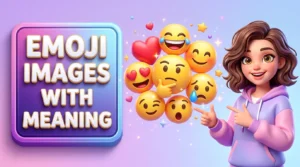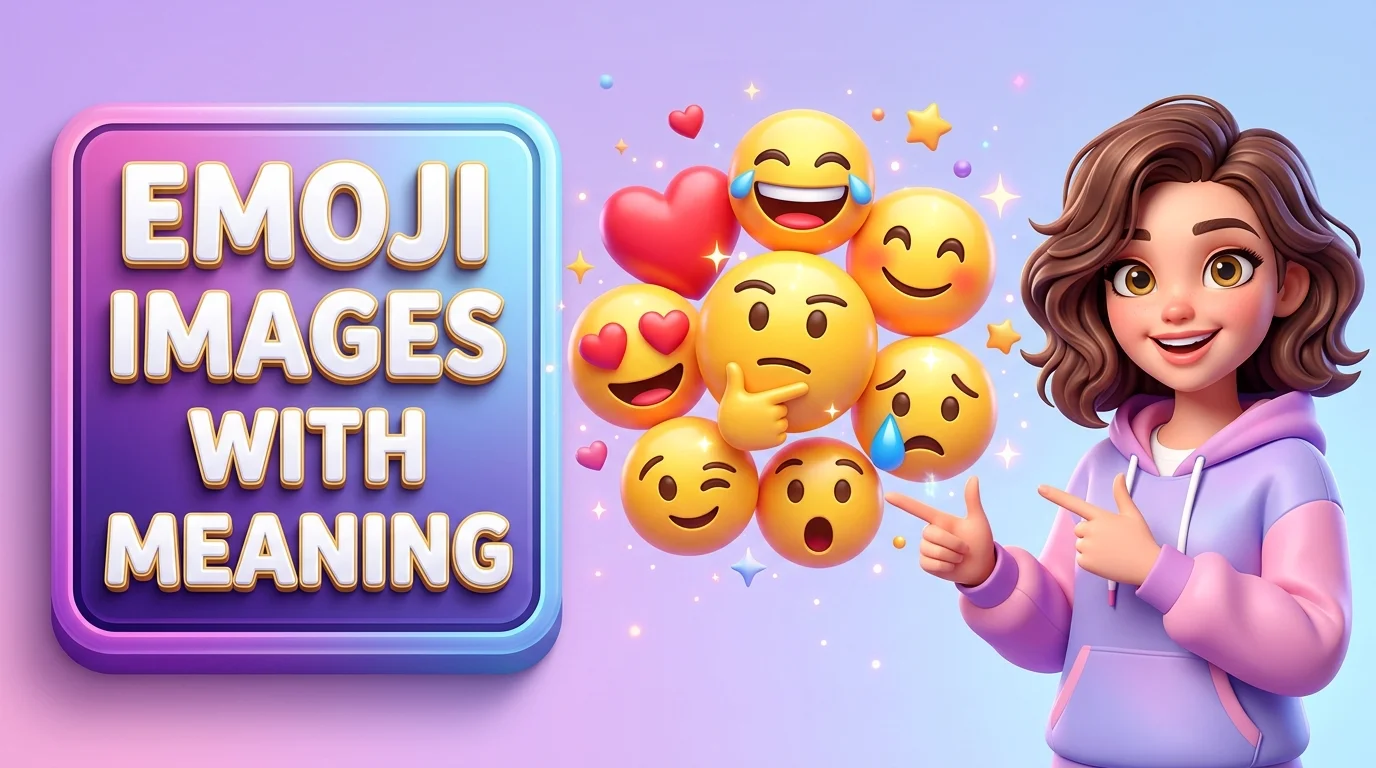
Emojis make online conversations more colorful, expressive, and fun, but do you always know what each emoji means? Emoji Images With Meaning help you understand the feelings, ideas, and messages behind popular symbols used in texting, social media, and everyday chats.
From smiling faces and heart emojis to hand gestures, animals, and food symbols, every emoji can communicate something different depending on the situation. For example, a red heart may express love, while a laughing face can show amusement or a playful reaction. Some emojis also have hidden meanings in flirting, friendships, and romantic conversations.
Understanding these meanings can help you avoid confusion and respond more naturally to messages. In this guide, you’ll discover popular emoji images and their meanings, learn how people use them in different conversations, and explore simple examples that make each emoji easier to understand.
What Are Emoji Images With Meaning?
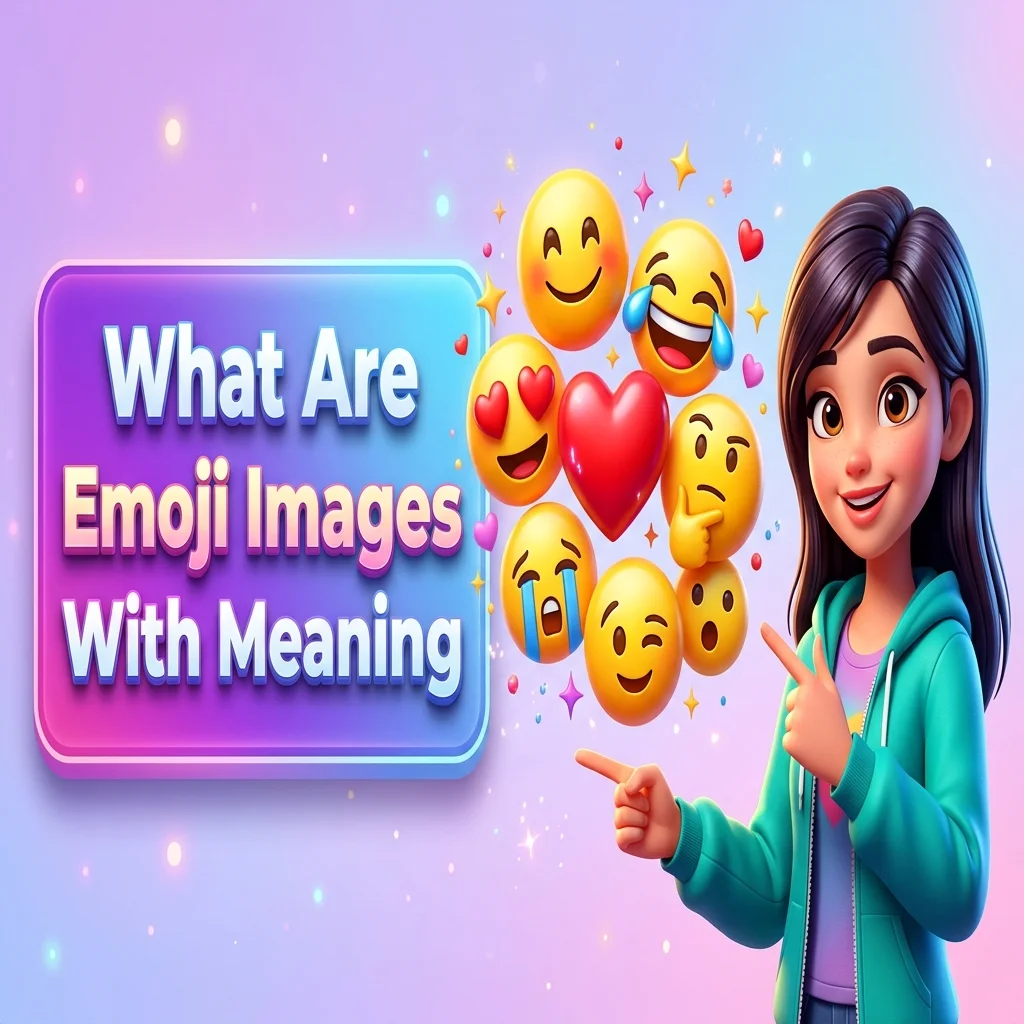
Emoji images are small digital symbols that represent emotions, objects, activities, people, animals, places, and ideas. They can make a message easier to understand and add emotion to plain text.
For example:
- ❤️ can represent love or deep affection.
- 😂 usually represents strong laughter.
- 😍 can show admiration or attraction.
- 😊 can express happiness or warmth.
- 😭 can show crying, sadness, or an exaggerated emotional reaction.
- 🔥 can mean something is exciting, attractive, impressive, or popular.
- 👍 can show approval or agreement.
The same emoji can sometimes have different meanings depending on who sends it and what was said before it.
Why Do People Use Emoji Images?
People use emojis because they make digital conversations feel more expressive and personal. Text alone can sometimes sound serious, cold, or confusing.
Compare these two messages:
“Thank you.”
“Thank you 😊”
The first message is polite, while the second can feel warmer and friendlier.
Emojis can also help communicate emotions that are difficult to express with words.
People commonly use them to:
- Show emotions
- Make messages friendlier
- Express affection
- Add humor
- Show excitement
- React to pictures
- Make social media posts more attractive
- Replace certain words
- Clarify the tone of a message
Popular Emoji Images With Meaning
Here are some of the most commonly used emoji images and their general meanings.
❤️ Red Heart Emoji
The red heart usually represents love, affection, care, romance, or strong emotional connection.
It can be used between romantic partners, family members, and close friends.
Examples:
- “I love you ❤️”
- “Thank you for everything ❤️”
- “Good night ❤️”
The exact meaning depends on the relationship between the people using it.
🥰 Smiling Face With Hearts
🥰 usually expresses affection, warmth, love, appreciation, or feeling emotionally touched.
Someone might use it after receiving a sweet message.
Example:
“That’s so sweet of you 🥰”
In romantic conversations, it can express loving or affectionate feelings.
😍 Heart Eyes Emoji
😍 commonly represents strong admiration, excitement, attraction, or love.
It is often used when someone sees something beautiful, attractive, delicious, or impressive.
Examples:
- “You look amazing 😍”
- “This cake looks so good 😍”
- “That view 😍”
😊 Smiling Face
😊 usually represents happiness, friendliness, warmth, kindness, or gentle affection.
It can also show slight shyness or a soft emotional reaction.
Example:
“I’m glad you liked it 😊”
😂 Face With Tears of Joy
😂 is commonly used when something is extremely funny.
It can also be used when someone is laughing at a funny situation, joke, meme, or embarrassing moment.
Example:
“You actually said that 😂”
🤣 Rolling on the Floor Laughing
🤣 usually represents very strong laughter.
It is often used when something is considered extremely funny.
Example:
“That video was hilarious 🤣”
😭 Loudly Crying Face
😭 literally represents crying, sadness, or emotional pain. However, online it is also frequently used for exaggerated reactions.
For example:
“This song is so beautiful 😭”
Here, the person may not actually be sad. They could be expressing that the song is emotionally overwhelming or beautiful.
🥺 Pleading Face
🥺 can express pleading, cuteness, vulnerability, shyness, or wanting something.
Example:
“Can I have one more cookie? 🥺”
It can also appear in affectionate or romantic conversations.
😘 Face Blowing a Kiss
😘 usually represents affection, love, flirting, or sending a kiss.
It can be romantic, but close friends and family members may also use it casually.
Example:
“Good night 😘”
😉 Winking Face
😉 can represent joking, teasing, flirting, or a playful hidden meaning.
Example:
“Maybe I’ll tell you later 😉”
The wink can suggest that the message should not be taken completely literally.
😏 Smirking Face
😏 often suggests confidence, teasing, sarcasm, flirtation, or a suggestive attitude.
Its meaning is highly dependent on context.
Example:
“You know exactly what I mean 😏”
😎 Sunglasses Face
😎 usually represents confidence, coolness, relaxation, or being impressed with yourself.
Example:
“Finished my exam 😎”
It can also be used jokingly.
🤩 Star-Struck Face
🤩 usually means excitement, amazement, admiration, or being impressed.
Example:
“Your new car looks amazing 🤩”
🔥 Fire Emoji
🔥 can mean something is hot, attractive, exciting, impressive, popular, or successful.
Examples:
“That outfit is 🔥”
“This song is fire 🔥”
“Your new design 🔥”
✨ Sparkles
✨ often represents beauty, excitement, freshness, magic, positivity, or emphasis.
It is frequently used around words to make them stand out.
Example:
“New beginning ✨”
💕 Two Hearts
💕 commonly expresses affection, love, friendship, sweetness, or emotional closeness.
It can be romantic or friendly.
💔 Broken Heart
💔 usually represents heartbreak, sadness, disappointment, or emotional pain.
Example:
“I thought everything was going well 💔”
💯 Hundred Points
💯 commonly means complete agreement, perfection, authenticity, or giving something full approval.
Example:
“That advice is 💯”
👍 Thumbs Up
👍 usually means approval, agreement, acceptance, or “okay.”
Example:
“See you at 7.”
“👍”
👀 Eyes Emoji
👀 can mean watching, curiosity, interest, surprise, suspicion, or “I’m paying attention.”
Example:
“You won’t believe what happened 👀”
It can also suggest that someone is interested in a person or situation.
🙏 Folded Hands
🙏 can represent prayer, gratitude, thanks, respect, hope, or asking for something.
Example:
“Please wish me luck 🙏”
It is also commonly used as a way of saying thank you.
🤔 Thinking Face
🤔 usually means thinking, questioning, uncertainty, or considering something.
Example:
“I’m not sure about that 🤔”
😳 Flushed Face
😳 can express embarrassment, surprise, nervousness, or feeling caught off guard.
Example:
“You really said that in front of everyone? 😳”
🙈 See-No-Evil Monkey
🙈 can represent shyness, embarrassment, awkwardness, or pretending not to see something.
Example:
“That was embarrassing 🙈”
Emoji Images With Meaning in Text Messages
Emoji meanings are especially dependent on context in private messages.
A simple emoji can completely change the tone of a sentence.
For example:
“Okay.”
may sound short or serious.
But:
“Okay 😊”
usually feels friendlier.
Likewise:
“Really?”
can sound suspicious.
“Really? 👀”
can suggest curiosity or interest.
“Fine.”
can sound annoyed.
“Fine 😂”
can make the message playful.
Emoji Meaning From a Girl
When a girl sends an emoji, its meaning depends on the conversation and your relationship with her. One emoji alone is rarely enough to determine someone’s feelings.
For example:
- ❤️ may show affection.
- 😊 may show friendliness or warmth.
- 🥰 may show affection or appreciation.
- 😉 may suggest teasing or playful flirting.
- 😍 may show admiration.
- 😂 may simply mean she found something funny.
- 👀 may show curiosity or interest.
Context matters more than the emoji itself.
Emoji Meaning From a Guy
Guys also use emojis in many different ways.
A guy sending ❤️ may be expressing affection, while 😂 may simply mean he found something funny.
Some common examples include:
- 😎 — confidence or being playful
- 😂 — laughter
- ❤️ — affection or love
- 🔥 — admiration or excitement
- 😉 — teasing or flirting
- 👀 — curiosity or interest
- 🥰 — affection or appreciation
The surrounding message should always be considered.
Emoji Meaning From a Crush
When an emoji comes from a crush, people often wonder whether it has a romantic meaning.
For example:
“You look great 😍”
can sound more admiring than:
“You look great 👍”
Similarly:
“Good night 😊”
has a different emotional tone from:
“Good night ❤️”
However, an emoji does not prove romantic interest. The overall conversation and behavior provide more context.
Emoji Meaning in Friendship
Friends use emojis to make conversations fun and expressive.
Common friendship emojis include:
- 😂 for jokes
- 🤣 for intense laughter
- ❤️ for affection and care
- 💕 for friendship and closeness
- 🙌 for celebration
- 🤝 for agreement or support
- 🔥 for something impressive
- 👀 for curiosity
- 😭 for dramatic reactions
- 😎 for playful confidence
For example:
“Bro, that was shocking 😂🔥”
could simply be a fun reaction between friends.
Emoji Meaning on Social Media
Emojis are heavily used on Instagram, TikTok, Facebook, Snapchat, X, and other platforms.
They can make captions more expressive and visually appealing.
For example:
“Weekend vibes 🌴☀️✨”
or:
“New outfit 😍🔥”
or:
“Best day ever ❤️✨”
Emoji meanings on social media can also depend on trends, memes, and online culture.
Emoji Images With Meaning for Flirting
Some emojis are frequently used in playful or flirtatious conversations.
Common examples include:
- 😉 — playful teasing
- 😏 — teasing or suggestive confidence
- 😍 — admiration or attraction
- 🥰 — affection
- 😘 — kiss or affection
- ❤️ — love or strong affection
- 🔥 — attractive or impressive
- 👀 — interest or curiosity
- 🫣 — shy or nervous reaction
For example:
“You looked really good today 😍”
has a stronger affectionate tone than:
“You looked good 👍”
Still, context is important.
Common Emoji Combinations and Their Meanings
Sometimes people use two or more emojis together to create a stronger message.
❤️🥰
Often expresses love, affection, and warmth.
😍🔥
Usually expresses strong admiration or attraction.
😂😭
Often represents laughing so hard that you are crying.
👀🔥
Can suggest that something looks attractive or impressive.
🥺❤️
Often expresses affection, sweetness, or an emotional request.
😏😉
Can create a playful or teasing tone.
🙏❤️
Can express gratitude, love, appreciation, or heartfelt thanks.
✨❤️
Often gives a message a warm, positive, or romantic feeling.
Friendly vs. Romantic Emoji Meanings
Some emojis can be either friendly or romantic.
For example, ❤️ can be used between romantic partners, parents and children, siblings, and close friends.
Similarly, 😘 can sometimes be romantic but may also be used casually by people who already communicate affectionately.
A useful way to understand an emoji is to consider:
- Who sent it?
- What did they say?
- What is your relationship?
- Do they normally use emojis?
- Are there other romantic or playful signals?
- What was the topic of the conversation?
This gives you a much better interpretation than looking at one emoji alone.
Similar Emojis and Their Differences
Some emojis look similar but communicate different feelings.
😊 vs. 🙂
😊 usually feels warmer and more expressive.
🙂 can be neutral, polite, friendly, or sometimes slightly awkward depending on context.
😍 vs. 🥰
😍 often emphasizes admiration or attraction.
🥰 usually emphasizes affection, warmth, and emotional sweetness.
😂 vs. 🤣
Both represent laughter.
😂 is extremely common for something funny, while 🤣 often suggests even stronger or more exaggerated laughter.
😘 vs. 😍
😘 represents sending a kiss or affectionate gesture.
😍 usually emphasizes admiration, attraction, or being impressed.
😏 vs. 😉
Both can be playful or flirtatious.
😉 is generally more lighthearted, while 😏 can have a more confident or suggestive tone.
Positive and Negative Emoji Meanings
Most emojis are not automatically positive or negative.
Their meaning can change based on context.
For example, 😭 can represent genuine sadness:
“I miss my family 😭”
But it can also be humorous:
“I ate the whole pizza 😭”
Similarly, 💀 can represent death literally in some contexts, but online it is often used to say something is extremely funny.
This is why emoji interpretation requires context.
Common Misunderstandings About Emoji Meanings
One Emoji Does Not Always Have One Meaning
There is no universal interpretation for every conversation.
Emojis Do Not Always Show Romantic Interest
A heart or kiss emoji can be affectionate without necessarily indicating a romantic relationship.
Some Emojis Are Used Sarcastically
😂, 😭, 🙃, 😏, and several others can have sarcastic meanings.
Different People Use Emojis Differently
One person may use ❤️ frequently, while another person may rarely use it.
Online Trends Change Meanings
Social media communities sometimes give emojis additional informal meanings that differ from their literal meanings.
How Context Changes Emoji Meaning
Consider the emoji 🔥.
If someone writes:
“The food was 🔥”
it may mean the food was excellent.
If someone writes:
“Your outfit is 🔥”
it may mean the outfit looks attractive or stylish.
If someone writes:
“The building is on 🔥”
it has a literal fire-related meaning.
The emoji stays the same, but the surrounding words change its meaning.
How to Respond to Emoji Images
Your response should match the tone of the conversation.
If someone sends:
“😍”
you might respond:
“Glad you liked it 😊”
If someone sends:
“😂”
you could say:
“I’m glad that made you laugh 😂”
If someone sends:
“❤️”
you could respond:
“❤️”
If someone sends:
“👀”
you might reply:
“What are you looking at? 😂”
The best response usually feels natural rather than overly analytical.
Emoji Images With Meaning for Social Media Captions
Emojis can also be used to improve captions.
Travel
“Exploring somewhere new 🌍✈️✨”
Food
“Good food, good mood 🍕😍”
Love
“Forever grateful for you ❤️✨”
Friendship
“Best memories with the best people 🥰❤️”
Birthday
“Another year, another adventure 🎂🎉🥳”
Fitness
“Workout complete 💪🔥”
Nature
“Peaceful morning 🌿☀️✨”
When Should You Avoid Using an Emoji?
Emojis are useful, but they are not appropriate for every situation.
You may want to avoid them when:
- Writing a formal business document
- Sending an official complaint
- Communicating serious legal information
- Writing an academic paper
- Discussing a sensitive situation
- Speaking with someone who prefers formal communication
In casual conversations, however, emojis can make communication more natural and expressive.
How to Understand an Emoji Correctly
When you see an unfamiliar emoji, do not immediately assume what it means.
Use this simple process:
Look at the Emoji Itself
Identify the emotion, object, or symbol represented.
Read the Entire Message
The surrounding words often explain the intended meaning.
Consider the Relationship
A message from a partner can have a different meaning from the same message sent by a coworker.
Look at Previous Messages
The conversation history can provide important clues.
Consider the Sender’s Normal Style
Some people use emojis constantly, while others use them rarely.
Look for Emoji Combinations
Several emojis together can create a meaning that is different from each emoji individually.
Frequently Asked Questions About Emoji Images With Meaning
What are emoji images with meaning?
Emoji images with meaning are visual symbols used to communicate emotions, reactions, objects, activities, or ideas in digital conversations.
What is the most common emoji meaning?
There is no single meaning shared by every emoji. Common emojis such as ❤️, 😂, 😊, 👍, and 😍 are widely used to express love, laughter, happiness, approval, and admiration.
Can an emoji have multiple meanings?
Yes. The same emoji can have different meanings depending on context, relationship, culture, and online trends.
What does ❤️ mean in text messages?
❤️ commonly represents love, affection, care, appreciation, or emotional closeness. Its exact meaning depends on the relationship and conversation.
What does 😂 mean?
😂 usually means something is very funny. It can also be used as an exaggerated reaction to an awkward, surprising, or ridiculous situation.
What does 👀 mean in texting?
👀 can express curiosity, interest, surprise, attention, suspicion, or “I’m watching.”
What does 🥰 mean from a girl?
🥰 can show affection, warmth, appreciation, happiness, or feeling emotionally touched. It does not automatically mean romantic interest.
What does 😍 mean from a guy?
😍 commonly shows admiration, excitement, attraction, or that he thinks something is beautiful or impressive.
Can emojis be used for flirting?
Yes. Emojis such as 😉, 😏, 😍, 🥰, 😘, ❤️, 🔥, and 👀 can appear in flirtatious conversations. Context determines whether the use is actually romantic.
Why do people use emojis instead of words?
Emojis make digital communication more expressive. They can add emotion, clarify tone, show reactions, and make messages feel more friendly.
Do emojis have the same meaning everywhere?
Not always. Meanings can vary by culture, age group, platform, community, and personal communication style.
Final Thoughts on Emoji Images With Meaning
Emoji images make digital communication more expressive, but their meanings are not always fixed. A single emoji can represent different emotions depending on the message, relationship, and situation.
If you want to understand an emoji correctly, look beyond the symbol itself. Read the entire message, consider who sent it, notice the other emojis being used, and think about the conversation’s overall tone.
Whether you are trying to understand ❤️, 😍, 😂, 🥰, 👀, 😏, 🔥, or another popular emoji, context is usually the most important part of the meaning.

Michael Brooks is a content writer and dream interpretation researcher with a passion for exploring the meanings behind dreams and the symbols they contain. He enjoys studying traditional dream interpretations alongside modern psychological perspectives to help readers better understand their dream experiences.