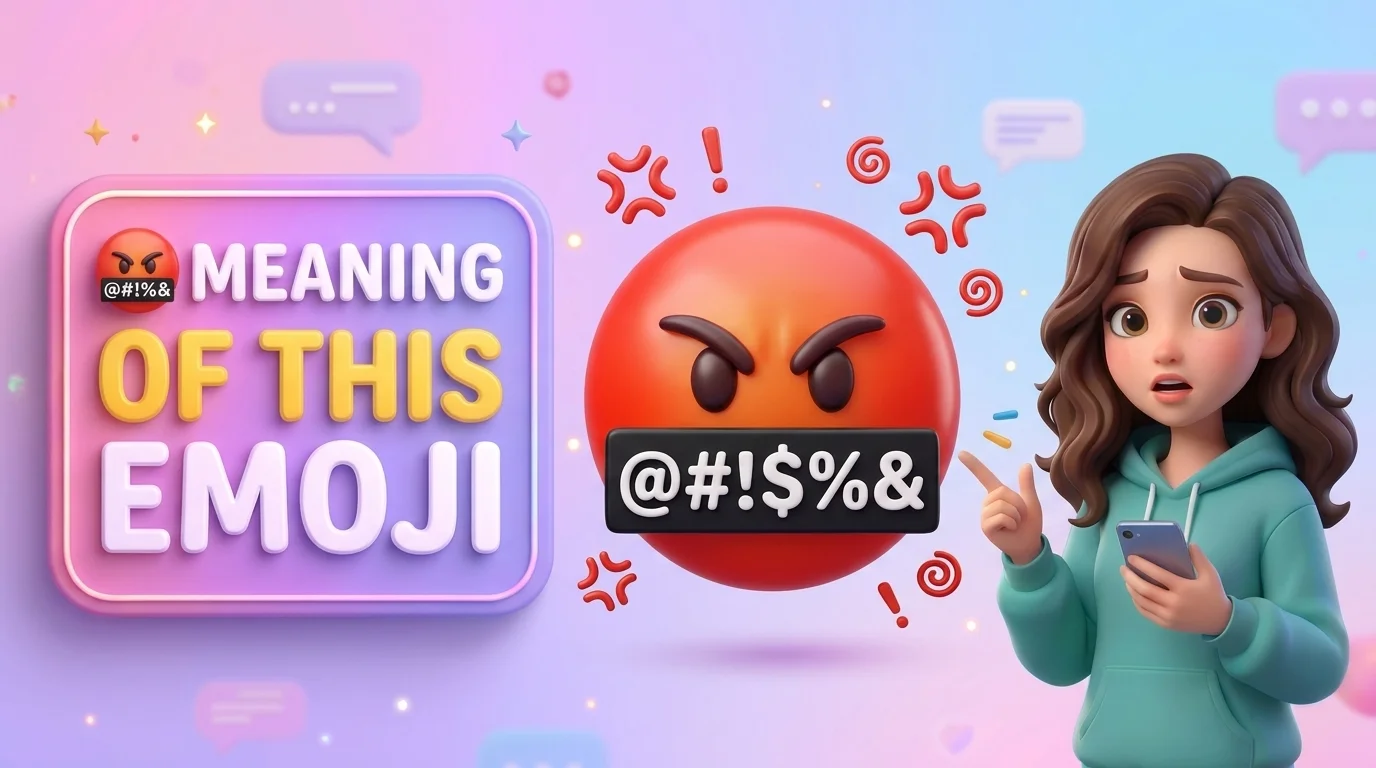
Have you ever received the 🤬 emoji in a text message and wondered why someone used such an angry-looking face? The 🤬 Meaning of This Emoji is usually associated with intense anger, frustration, outrage, or strong annoyance. Officially known as the face with symbols on mouth emoji, it represents someone who is so angry that they might use swear words or struggle to control their emotions.
People often use it when reacting to an upsetting situation, expressing disappointment, or showing how furious they feel about something. Among friends, it can also be used humorously to exaggerate an angry reaction or complain about a frustrating experience. However, the emoji does not always mean the sender is genuinely furious; the surrounding message and relationship matter.
In this guide, you’ll discover what 🤬 means in texting, WhatsApp, friendship, and relationships, explore how its meaning may change depending on who sends it, and learn how to respond with practical examples.
For example:
“My internet stopped working during the meeting 🤬.”
Here, 🤬 means:
“I’m extremely angry about this.”
However, the emoji can also be used jokingly. Friends may send 🤬 after losing a game, getting teased, or experiencing a small inconvenience.
In this guide, we’ll explain what 🤬 means in texting, WhatsApp, social media, friendship, relationships, flirting, and conversations between a girl and a guy. We’ll also compare 🤬 with similar angry emojis and explain how to respond when someone sends it.
What Does 🤬 Mean?
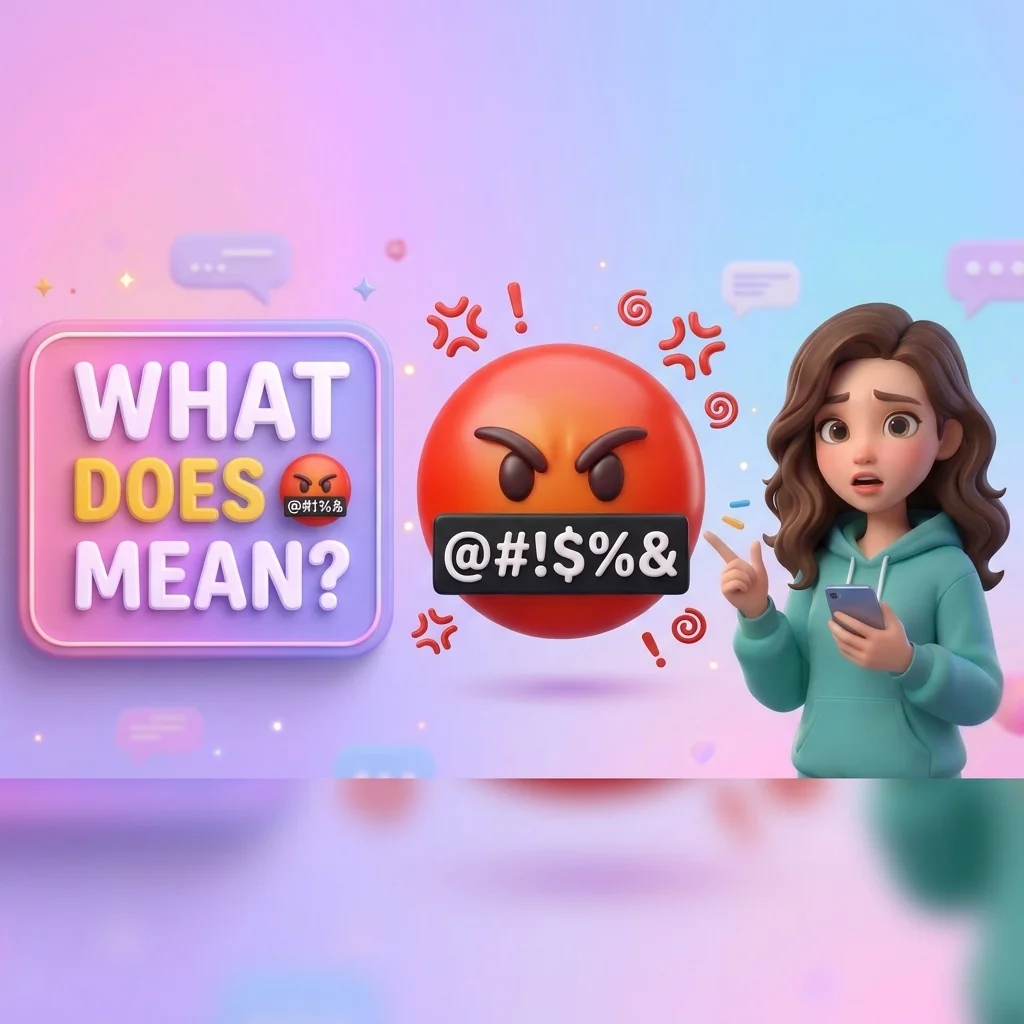
The 🤬 emoji represents strong anger or frustration.
It can communicate:
- Anger
- Rage
- Extreme frustration
- Irritation
- Swearing
- Being fed up
- Losing patience
- Feeling offended
- Strong annoyance
- Emotional frustration
The symbols over the mouth are important because they suggest that the person is saying or thinking bad words.
For example:
“This foolish computer crashed again 🤬.”
This is stronger than simply saying:
“I’m annoyed.”
The person is communicating serious frustration.
🤬 Meaning in Simple Words
In simple words, 🤬 can mean:
m really angry.”
“I’m so frustrated.”
“I’m furious.”
The about to lose my patience.”
“I can’t believe this.”
“I’m swearing right now.”
“This is seriously annoying.”
The exact intensity depends on the situation.
What Does 🤬 Mean in Texting?
In texting, 🤬 is often used as a strong emotional reaction.
For example:
“My phone just deleted all my photos 🤬.”
The sender is showing extreme frustration.
Another example:
“He lied to me again 🤬.”
Here, the emoji may communicate anger and disappointment.
People also use 🤬 after something goes wrong:
“I missed the bus by 10 seconds 🤬.”
The meaning is:
“I’m extremely annoyed right now.”
🤬 Meaning on WhatsApp
On WhatsApp, 🤬 is commonly used in conversations with friends, family, partners, and other people.
It can appear when someone is:
- Angry about something
- Complaining
- Frustrated
- Arguing
- Venting
- Jokingly angry
- Annoyed by a situation
For example:
“My boss gave me another deadline 🤬.”
This means:
“I’m really frustrated about this.”
A friend might also use it jokingly:
“You ate my fries again 🤬😂.”
The 😂 makes it clear that the anger is probably playful.
🤬 Meaning on Social Media
On Instagram, TikTok, Facebook, X, Snapchat, and other social platforms, 🤬 is often used to emphasize anger.
For example:
“When the Wi-Fi goes down right before the final episode 🤬.”
This can be humorous.
Another example:
“That ending made me so mad 🤬.”
Here, the emoji emphasizes frustration with a movie, show, book, or game.
Social media users often exaggerate emotions for entertainment, so 🤬 does not always indicate genuine rage.
🤬 Meaning From a Girl
When a girl sends 🤬, she is usually expressing strong frustration or anger.
For example:
“Why did you tell everyone my secret? 🤬”
This is likely genuine anger.
But context matters.
She might also use it playfully:
“You ate the last slice of pizza 🤬😂.”
The combination with 😂 makes the message sound more humorous.
If a girl sends only 🤬 without words, she may be communicating:
“I’m really mad.”
The safest approach is to look at the conversation before deciding how serious it is.
🤬 Meaning From a Guy
A guy may use 🤬 when he is:
- Extremely frustrated
- Angry
- Annoyed
- Losing patience
- Complaining
- Jokingly angry
For example:
“My team lost in the last minute 🤬.”
This communicates strong frustration.
Another example:
“You changed the password again 🤬😂.”
Here, the anger is probably playful.
🤬 Meaning From a Crush
If your crush sends 🤬, don’t automatically interpret it as anger toward you.
It could be frustration about:
- School
- Work
- Traffic
- A game
- A friend
- A bad experience
- Something happening online
For example:
“My presentation file disappeared 🤬.”
Clearly, the anger is directed at the situation.
But if your crush says:
“Why would you do that 🤬?”
then the anger may be directed toward you.
Always read the surrounding words.
🤬 Meaning in a Relationship
Partners may use 🤬 when they are genuinely frustrated or playfully angry.
For example:
“You forgot our dinner reservation 🤬.”
This may communicate real annoyance.
But:
“You stole my blanket again 🤬😂.”
This is probably playful.
The relationship and tone matter.
If someone sends 🤬 during a serious argument, it should generally be taken more seriously than when it appears alongside laughing emojis.
🤬 Meaning When Flirting
🤬 is not normally a flirting emoji.
However, couples or people flirting may use it in a playful way.
For example:
“You look way too good in that picture 🤬🔥.”
Here, 🤬 may exaggerate the person’s reaction.
Another example:
“Stop making me blush 🤬😂.”
This can be playful rather than genuinely angry.
The emoji itself does not mean flirting.
🤬 Meaning in Friendship
Friends often use 🤬 to express exaggerated anger.
For example:
“You started without me? 🤬😂”
The person may be pretending to be angry.
Another example:
“You spoiled the movie for me 🤬.”
This could be genuine frustration.
Friends often understand each other’s communication style, so 🤬 can range from serious anger to playful teasing.
Is 🤬 a Swearing Emoji?
Yes, 🤬 is strongly associated with swearing or profanity.
The symbols over the mouth represent swear words being spoken or censored.
It can therefore communicate:
“I’m swearing right now.”
or:
“I have some very strong words to say.”
However, it does not literally show a specific swear word. The exact words depend on the sender and context.
Is 🤬 Stronger Than 😠?
Usually, yes.
😠 Angry Face
😠 generally represents:
- Anger
- Irritation
- Frustration
- Displeasure
🤬 Face With Symbols on Mouth
🤬 usually represents:
- Extreme anger
- Rage
- Strong frustration
- Swearing
- Losing patience
- Being furious
For example:
“I’m annoyed.” → 😠
“I’m absolutely furious.” → 🤬
Of course, people use emojis differently, so this is a general distinction rather than a strict rule.
🤬 vs 😡
Both emojis communicate anger, but there is a slight difference.
😡 usually represents intense anger or rage.
🤬 adds the idea of swearing, profanity, or extremely strong frustration.
For example:
“I’m angry about this 😡.”
Compared with:
“I can’t believe this happened 🤬.”
The second often sounds more intense.
🤬 vs 😤
The 😤 emoji is commonly called Face With Steam From Nose.
It can mean:
- Frustration
- Determination
- Annoyance
- Pride
- Being fed up
🤬 is more directly associated with anger and swearing.
For example:
“I’m going to prove them wrong 😤.”
This can represent determination.
But:
“They deleted my work 🤬.”
This communicates stronger anger.
🤬 vs 😠
😠 usually expresses ordinary anger or irritation.
🤬 is stronger and suggests the person is extremely frustrated or using strong language.
A simple way to remember it is:
😠 = angry
🤬 = extremely angry / swearing
🤬 vs 💢
The 💢 emoji is often used to represent anger, frustration, or an angry reaction.
It is not a facial expression, while 🤬 shows an angry face.
People sometimes combine them:
“You did what?! 🤬💢”
This creates a very strong angry reaction.
🤬 Emoji Combinations and Their Meanings
Emoji combinations can make the intended emotion clearer.
🤬😡
This emphasizes intense anger.
Example:
“I can’t believe they did that 🤬😡.”
🤬😤
This can mean:
“I’m extremely frustrated and fed up.”
🤬😂
This often indicates fake or playful anger.
Example:
“You took my fries 🤬😂.”
🤬😭
This can represent extreme frustration or emotional overwhelm.
Example:
“I studied all night and still failed 🤬😭.”
🤬🔥
This can emphasize intense anger or frustration.
🤬💢
This strongly emphasizes anger.
🤬🤦
This can communicate frustration mixed with disbelief.
Example:
“He forgot his own password again 🤬🤦.”
🤬🙄
This can express irritation with someone’s behavior.
🤬 Meaning in Memes
The 🤬 emoji is extremely common in memes.
People use it to exaggerate reactions to everyday problems such as:
- Slow internet
- Losing a game
- Traffic
- Bad customer service
- Difficult homework
- Broken technology
- Spoilers
- Missing the bus
- Losing a match
- Burned food
- Forgetting passwords
For example:
“When the Wi-Fi stops working during an online exam 🤬.”
The emoji makes the situation feel dramatic and humorous.
🤬 Meaning in Gaming
Gamers frequently use 🤬 when something goes wrong.
Examples include:
“I was one hit away from winning 🤬.”
“The server disconnected again 🤬.”
“My teammate left the game 🤬.”
It can represent genuine frustration or playful rage.
Gaming communities often use exaggerated angry emojis for entertainment.
🤬 Meaning at Work or School
At work or school, 🤬 can express frustration about difficult situations.
For example:
“Another assignment due tomorrow 🤬.”
or:
“The meeting got moved again 🤬.”
However, using 🤬 in a professional conversation can sound aggressive. It is generally safer to use it with people who understand your casual communication style.
Is 🤬 a Bad Emoji?
No. 🤬 is not inherently a “bad” emoji.
It represents anger and profanity, so it can sound aggressive depending on the context.
Using it with friends can be completely normal.
But sending 🤬 to a boss, teacher, customer, or someone you barely know could be interpreted as disrespectful.
The relationship and situation matter.
Is 🤬 a Rude Emoji?
It can be.
Because 🤬 is associated with swearing and strong anger, it may sound rude when directed at another person.
For example:
“You are so annoying 🤬.”
This can sound aggressive.
But:
“My internet is down again 🤬.”
Here, the frustration is directed at the situation rather than a person.
Does 🤬 Mean Someone Is Mad at You?
Not necessarily.
The emoji only shows anger or frustration. You need to determine what the anger is directed toward.
For example:
“My car broke down 🤬.”
They are not angry at you.
But:
“Why did you do that 🤬?”
They may be angry with you.
Look at the words around the emoji before assuming the anger is personal.
How to Respond to 🤬
Your response should depend on the situation.
If someone is genuinely angry, stay calm.
You can say:
“What happened?”
“Are you okay?”
“I understand why you’re frustrated.”
“Do you want to talk about it?”
If they are joking:
“😂 Calm down!”
“Bro is furious 😂.”
“It wasn’t that serious 😂.”
If they are angry at you:
“I’m sorry. I didn’t mean to upset you.”
A calm response is usually better than responding with another angry emoji.
Funny Responses to 🤬
If the conversation is clearly playful, you could respond:
- “Calm down 😂.”
- “Someone’s angry!”
- “Bro entered rage mode.”
- “Deep breaths 😂.”
- “I can feel the anger through the screen.”
- “Okay, okay, my bad 😂.”
- “Don’t explode 🤣.”
- “Rage mode activated.”
What Does 🤬 Mean From a Girl to a Guy?
When a girl sends 🤬 to a guy, it may mean she is genuinely angry, annoyed, frustrated, or jokingly mad.
For example:
“You ate my chocolate 🤬😂.”
This is probably playful.
But:
“Why did you lie to me 🤬?”
This is more serious.
The surrounding words and tone matter more than the emoji alone.
What Does 🤬 Mean From a Guy to a Girl?
Similarly, a guy sending 🤬 to a girl may be:
- Expressing frustration
- Complaining
- Reacting to bad news
- Pretending to be angry
- Showing genuine anger
For example:
“You scared me so badly 🤬😂.”
This is probably playful.
But:
“Don’t talk to me like that 🤬.”
This sounds much more serious.
Common Misunderstandings About 🤬
It Does Not Always Mean Rage
Sometimes people use it for minor frustrations.
It Does Not Always Mean the Person Is Angry at You
They may simply be frustrated with a situation.
It Does Not Automatically Mean They Are Swearing at You
The emoji represents profanity generally, not necessarily directed insults.
It Can Be Playful
🤬😂 often suggests exaggerated or fake anger.
Context Matters
The same emoji can be serious in one conversation and funny in another.
How to Know If 🤬 Is Serious
Look for clues in the message.
Serious Signs
The message may be serious if it contains:
- Direct accusations
- Insults
- Threatening language
- Repeated angry messages
- Serious complaints
- No laughing or playful emojis
For example:
“Why would you do that to me 🤬?”
Playful Signs
It is more likely playful if it includes:
- 😂
- 🤣
- 😜
- 😉
- ❤️
- A joking situation
For example:
“You ate my fries again 🤬😂.”
Frequently Asked Questions About 🤬 Meaning
What does 🤬 mean?
🤬 usually means extreme anger, frustration, rage, irritation, or swearing. It is known as the Face With Symbols on Mouth emoji.
What does 🤬 mean in texting?
In texting, 🤬 usually communicates strong frustration or anger. It can also be used jokingly to exaggerate a reaction.
What does 🤬 mean on WhatsApp?
On WhatsApp, 🤬 can mean “I’m furious,” “I’m really annoyed,” or “I’m so frustrated.” With 😂, it may represent playful anger.
What does 🤬 mean from a girl?
From a girl, 🤬 usually expresses strong frustration or anger, although it can also be playful depending on the conversation.
What does 🤬 mean from a guy?
From a guy, 🤬 can indicate anger, frustration, annoyance, or exaggerated joking anger.
What does 🤬 mean from a crush?
If your crush sends 🤬, it does not automatically have a romantic meaning. They may simply be angry or frustrated about something.
Is 🤬 a swearing emoji?
Yes. The symbols covering the mouth represent censored profanity or swearing, making 🤬 strongly associated with bad language.
Is 🤬 stronger than 😠?
Generally, yes. 😠 represents anger or irritation, while 🤬 usually communicates more intense anger and the idea of swearing.
What does 🤬😂 mean?
🤬😂 usually means playful or exaggerated anger. It can communicate “I’m pretending to be mad” or “This is making me shocking, but it’s funny.”
What does 🤬❤️ mean?
🤬❤️ can express playful frustration mixed with affection, especially between romantic partners or close friends. Context is important.
Is 🤬 rude?
It can be perceived as rude because it represents strong anger and profanity. Whether it feels rude depends on who receives it and why it was sent.
Does 🤬 mean someone is angry at you?
Not necessarily. The sender may be angry about a completely unrelated situation. Read the surrounding message to determine what caused the frustration.
Final Thoughts on 🤬 Meaning
The 🤬 meaning of this emoji is mainly connected with strong anger, frustration, irritation, rage, and swearing. The symbols covering the mouth represent profanity, which makes 🤬 stronger than many ordinary angry emojis.
However, 🤬 is not always serious. Friends, couples, gamers, and social media users often use it to exaggerate minor frustrations or create a funny reaction. Adding emojis such as 😂 or 🤣 can make the anger clearly playful.
The best way to understand 🤬 is to look at the words, situation, relationship, and other emojis around it. If someone sends 🤬 after bad news, they may genuinely be angry. If they send 🤬😂 after you steal their fries, they are probably joking.

Daniel Brooks is a passionate writer and dream symbolism researcher with a strong interest in helping readers understand the hidden meanings behind their dreams. He specializes in explaining dream interpretations through a balanced approach that combines traditional symbolism, psychology, and practical insights.